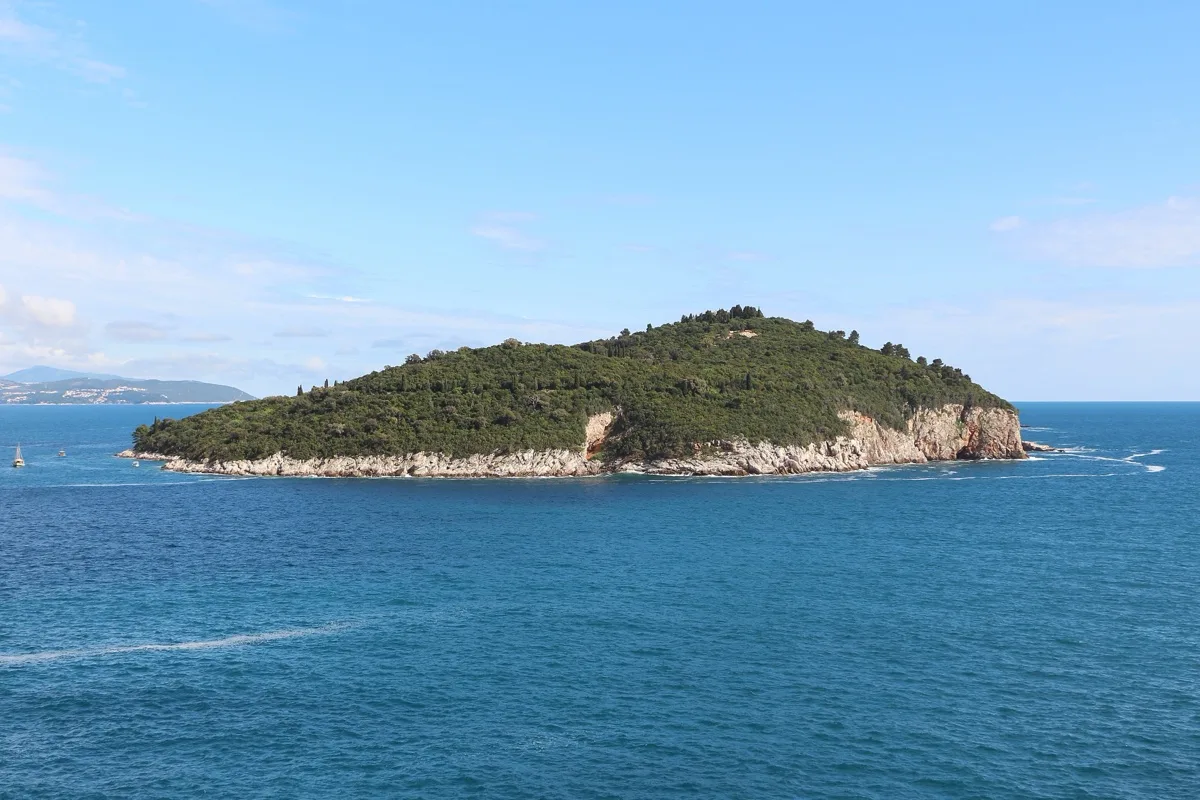
Lokrum is the green island 600 metres off the Old Town — a protected nature reserve of pine forest, cloisters and peacocks, with no cars, no hotels and no permanent residents. Going by private boat means you cross when you choose, skip the ferry queue at the Old Port, and fold the island into a swim-and-cruise morning rather than a timetable.
What is Lokrum, exactly?
A 72-hectare island that has been a strict nature reserve since 1963. Benedictine monks founded a monastery here in 1023 and held the island for centuries; local legend says they cursed it when they were expelled, which has never discouraged a single swimmer. In 1859 Archduke Maximilian of Habsburg bought Lokrum as a summer retreat, planted the botanical gardens and imported the peacocks whose descendants still patrol the paths. The Dubrovnik Tourist Board lists it as the city’s single most visited excursion — and it earns that on foot within the first ten minutes ashore.
Note the reserve rules: day visits only, no smoking outside marked areas, and an entry fee charged per person on the island. That fee is not included in your charter price; everything else — skipper, insurance, safety equipment — is.
How the trip works from Gruž
You board at Gruž Harbour (Obala Stjepana Radića 25) and take the scenic route: around the Lapad headland, past Fort Lovrijenac and the entire sea face of the city walls — the same views as our Old Town boat tour, en route rather than as the destination. After 25–30 minutes the skipper drops you at Portoč, Lokrum’s small landing bay on the northwest shore.
Most guests pair the island with the half-day yacht charter — 4 hours, from €730 per boat on Catamaran X, up to 12 guests. A typical shape: 30 minutes cruising the walls, two hours ashore on Lokrum, then an hour of swim stops along the island’s south cliffs or across at Betina cave before returning to Gruž.
What you’ll see ashore
- The Benedictine monastery — Romanesque-Gothic cloister, later Maximilian’s residence, now ringed by the botanical garden’s cypresses and century-old palms.
- The Dead Sea (Mrtvo more) — a shallow salt-water lagoon linked to the open sea through the rock. Warm, calm and barely two metres deep in places: the best swim on the island for children.
- Peacocks and rabbits — Maximilian’s imports, entirely unbothered by people. Keep your lunch zipped away.
- Fort Royal — the French-built fortress (1806) on Glavica hill, a 20-minute climb for a view back across the water to the walls and Srđ.
- The south-shore rocks — flat bathing slabs above deep, clear water, including the naturist stretch marked FKK at the eastern tip.
When is the best time to go?
Early. The first ferries land around 09:00 and the paths fill by late morning, so a 09:00 charter departure puts you ashore with the peacocks nearly to yourselves. The light in the cloister and gardens is best before noon. In July and August an afternoon visit works too if you swim first and walk after 16:00, once the day-trippers thin out. The season runs April–October, matching the reserve’s boat schedule listed on croatia.hr.
Practical notes
- Wear shoes you can walk in — paths are gravel and shaded, but the Fort Royal climb is stony.
- The island has a café and a restaurant near the monastery; prices are island prices.
- Sea shoes help on the bathing rocks — the south-shore slabs sit above deep water.
- Free cancellation up to 24 hours before departure; if the bora blows, we rebook or refund in full.
Ready to cross? Book a half-day charter and tell us your date — Sarah replies personally, usually within the hour.